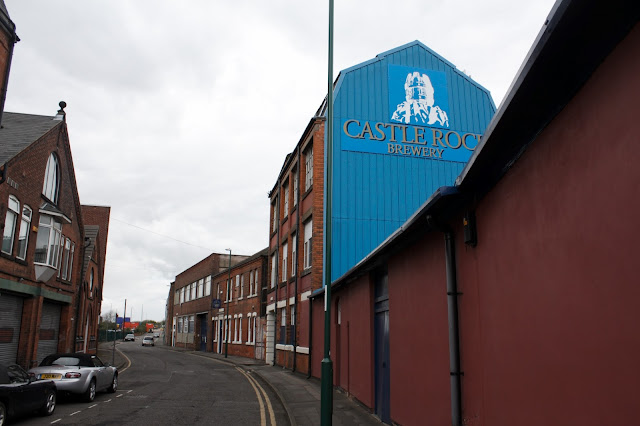
When
I first started street photography I felt very nervous and my confidence were
very low, I think this was due to me think about what reactions I could get and
if they'd be negative towards me taking photos, especially when it contained
them. throughout my experience the longer I did it the more confident I felt
and felt like a was more able to take certain shots, whereas a lot of photographers
stay in one place and wait for the right moment I decided to walk around and
try to capture the right image, like most street photographs I decided to shoot
in black and white I felt this created a more atmospheric effect and captured
more detail.
Monday, 23 May 2016
Raw Workflow
Raw Workflow

Positives
-You can change a lot of little things individually
-Raw images have a better quality than other files such a JPEG
Negatives
-File sizes are a lot bigger
the size of a raw file is a lot bigger than other files which will cost the photographer more money on memory for the computer, storage devices and memory cards in camera, because the files are a lot bigger if you have a pc which isn’t that good it will take a longer time to open and edit the image.
My Example of Raw workflow
Before
After
Taking photos in Raw is a way of saving a photo
with the minimum amount of data, this type of file can be capture on a digital
camera, motion image scanner or an image scanner, the image is taken with the
camera, the information is taken in through the sensor and saved immediately,
it isn’t white balanced, saturated sharpened, ect., it is called a raw file
because there hasn't been any processing done to the image or film yet and is
not yet in a position to be printed off. Once
the file is open it is then possible to edit and change the images
information to suit what the photographer or filmer wants. This type of file
has many positives and negatives.
Positives
-You have more control over your
image
raw files let you change almost anything when it comes to processing your image, for example you could have taken a image and it appears to exposed you can open the raw editor and change the exposure to whatever you want, another example of being in control is you could have taken an image which hasn’t captured the colours correctly so you can show certain colours more and even change certain colours to what you want.
-You can change a lot of little things individually
You are
able to change things like contrast, highlights, shadows,
clarity, vibrancy and saturation, even though you can change things
like this on a normal image file raw gives you more of
a natural effects, noticeable effects and allows you to
change a lot of things separately.
-Raw images have a better quality than other files such a JPEG
You get a
better quality because the sensor on the camera is able to detect a lot more
date than other forms of file.
Negatives
-It takes a lot of time to correct
and change images
it takes a
lot more time to change and edit a raw file because it is all done individually
and a lot of things have to be changed rather than just a big change with JPEG
for example if some wanted to change the exposure with JPEG they could do it
all at once but with a raw file it is better to scan over and change everything
individually to get the best outcome
-File sizes are a lot bigger
the size of a raw file is a lot bigger than other files which will cost the photographer more money on memory for the computer, storage devices and memory cards in camera, because the files are a lot bigger if you have a pc which isn’t that good it will take a longer time to open and edit the image.
My Example of Raw workflow
Before
After
Guessing Shutter speed, ISO and Aperture
This was the first time we went out to take photos during this assignment, we went out into a surrounded courtyard at around 9:30am while the sun was low so shadows were created, before we went out we set our cameras up to a default setting which was 1/125 shutter speed, F8 aperture and and ISO of 200. the first image was ok at a low level where it was darker but started to become over exposed towards the sky where it was much brighter than the bottom, we tested and changed the camera settings to throughout the images, eventually i picked the right cameras settings, i kept everything else the same but just upped the shutter speed
In this image i did the same thing, guessed then started two change setting around, although in these images instead of changing the shutter speeds and aperture it was easier and more effective for me to change the ISO, but in the later images i wanted to capture the detail on the windows this meant it was easier to change the shutter speeds and aperture to capture the light.
These images were harder to capture because the lighting went from one extreme to another, from the sky the light was very bright and over powering to the camera and behind the wall there was a lot of darkness and shadows which took a lot of detail away from the wall, there was also a third factor and that was the brick wall to the left of the image which was reflecting light.
City of Colour
During
my time taking images in the street I feel focusing on colour was the hardest, because
there is so much colour in the city and the streets I felt it was very hard to
capture an image where the colour is the main focus and the whole image isn’t
to noisy and distracting. Because colour is also everywhere it was a lot harder
I feel to notice something which worked as a photograph, something that would
really draw attention and make the view focus on the image. I feel it was made easier because i was focusing on things which weren't moving, for example only a few of my images contained people which were moving and this made it easier tho get the shot i wanted.
Politics in Photography
Politics and Photography
(3)
(4)
(5)
Politics
and photography are two things which go together hand in hand, all throughout
the photography from when it started to the modern day it has been used for
politics, a major time when this was happening was during the DaDa movement
which came about from 1916 to around 1924, the artists involved in this
movement used photography and other art forms to retaliate against the first
world war and show the evil of things which led to the war, things like
nationalism. It was a movement which didn't necessarily focus on the aesthetics
of the image but focus more on the story behind the photo and a certain meaning
which they wanted to get across, which is very similar to old and modern types
of photography which is used for political use. A big genre of photography
which is very common in the political field is documentary photography because
it is a type of photography which is built for politics and is there to inform
and portray a message across to the audience.
Photography can be used in many different type of political ways for example
it can be used for political views in war, social, propaganda and many other things.
a good example of political use in war is the famous photographer Don McCullin
who is a photographer who believed that there had to be a message behind a photography and that the audience had to feel something while looking at an image or
photograph we no this when he said "Photography for me is not looking, it's feeling. If you can't feel what you're looking at, then you're never going to get others to feel anything when they look at your pictures."(1), he is most well-known for his photographs of the Vietnam and Falkland’s
war, these photographs where taken to inform and show people what was happening
in the war although he wasn’t give permission by the British press to show his
work, this is because it could be used and could cause a political imbalance
while Margret Thatcher was prime minister.
"Our once great newspapers, which told us what went on in the world even when we couldn't affect it, have become instruments of a promotional culture, little more than catalogues advising us what to consume. This is not a great age in which to be a photojournalist."(2)- Don McCullin
A good example of a photographer
who has done a project which focuses on social politics and social issues is a
photographer called Steve Huff, he did a project called My Homeless Project
where he went round focusing on homeless people, he also sat with them and got
information and stories from them, this is a good example of political photography
because its teaching the audience something and informing them about something
which is happening I there everyday life. Unlike Don McCullins work where the
media didn't give him permission because it is a modern project there are many
more outlets where a photographer can show there work, even though Steve Huff's
[project isn't like don McCullins and would have gotten media access even if
the media said he would have been able to show it there would be man different
outlets for example social media and websites.
Even
though photography which is usually used hand in hand with politics is there to
inform and teach the audience they can also be used for a negative effect for
example it can be a photography about a certain thing and a newspaper or the
media use it to say a point or get a point across which they want to fool the audience
into believing, this is a big factor in modern day photography, especially
documentary photography which is turning audiences away, it is more common now
to change images a certain way though the perspective of the media and through
photo editing software.
Bibliography
(1)Don McCullin, Sleeping With Ghosts : A Life's Work in Photography by Don McCullin (Photographer), Mark Haworth-Booth (Introduction), Donald McCullin , ISBN: 0893816590 , Page: 96
(2)Don McCullin - 10 September 1997, British Journal of Photography
(3)http://cloud.hauserwirth.com/documents/tFRpB4Sd549G8nVV4icCi8qOpu8dG4lqIC8pv24Px6KK3SEu2Y/large/mcc6800-tet01-dnRu2O.jpg
(4)http://i0.wp.com/www.stevehuffphoto.com/wp-content/uploads/2011/08/rodney1.jpg?w=680
(5)http://i0.wp.com/www.stevehuffphoto.com/wp-content/uploads/2011/08/gary8.jpg?w=680
Subscribe to:
Posts (Atom)